Personal care has changed too. He uses an electric nail file for his fingernails but must rely on others to cut his toenails. Buttons are difficult to manage, handing things to people is impossible without shaking, and even simple phone use is affected. "My phone is too small for typing. My fingers hit the wrong letters. Thankfully I have a tablet with a keyboard attachment," he explains.
Social situations can be hard to navigate. If someone buys him a drink, he cannot easily return the favour. Going to the bar or handing something over without shaking is not possible, and as a result, he often avoids social settings. "It just makes me feel even more decrepit," he admits honestly.
Despite this, David remains determined to contribute where he can. As a celebrant, he continues to serve his community, adjusting his approach by using a lectern or a small table for his script. "There are many small but crucial hurdles doing this service," he says. "But I want to keep doing whatever I can for as long as I can."
He had been due to undergo MR guided focused ultrasound at The Walton Centre in Liverpool on 29th January, a procedure that offered real hope of reducing his tremor. Shortly beforehand, however, his local hospital scheduled surgery to remove cancer from his forehead for 18th January.
Worried that this might prevent the brain procedure from going ahead, David contacted The Walton Centre to check. He was reassured that the cancer removal would not affect the ultrasound treatment and was advised to proceed. "I was elated," he recalls.
The forehead surgery took place as planned. But when David travelled to Liverpool on 29 January, was prepped, gowned and placed on the operating bed, the neurosurgeon examined the surgical site and realised the situation was more complex than expected. The removal area was larger than anticipated and circular in shape, extending close to the hairline. There was a possibility it could interfere with the ultrasound treatment. The procedure could not safely go ahead until the area had healed further.
"I was devastated," David says.
Since then, the cancer site has been checked weekly. His surgeon has now reassured him that healing should be sufficient for the ultrasound procedure to take place after 18 February, and a new appointment has been scheduled for 5 March.
In the meantime, the tremor continues to worsen. Trying to eat often results in more food on the table or floor than in his mouth. The physical challenges are significant, and the mental strain is increasing too. Frustratingly, the situation has been complicated by the fact that NHS services in different regions cannot access one another’s records, making coordination between teams more difficult.
Yet even with these setbacks, David remains hopeful. He is looking forward to the rescheduled procedure and hopes it will substantially lessen, if not remove, the tremor in one hand.
"I live a good life," he says. "I am a devoted husband. I make the very best of life. I can talk, and I can answer many questions on The Chase!"
David chose to share his story to give others a glimpse into the everyday realities of tremor, the constant adjustments, the setbacks, and the resilience required.
"Thanks for listening," he says simply. Through his story, he reminds us how important it is that no one faces tremor alone.
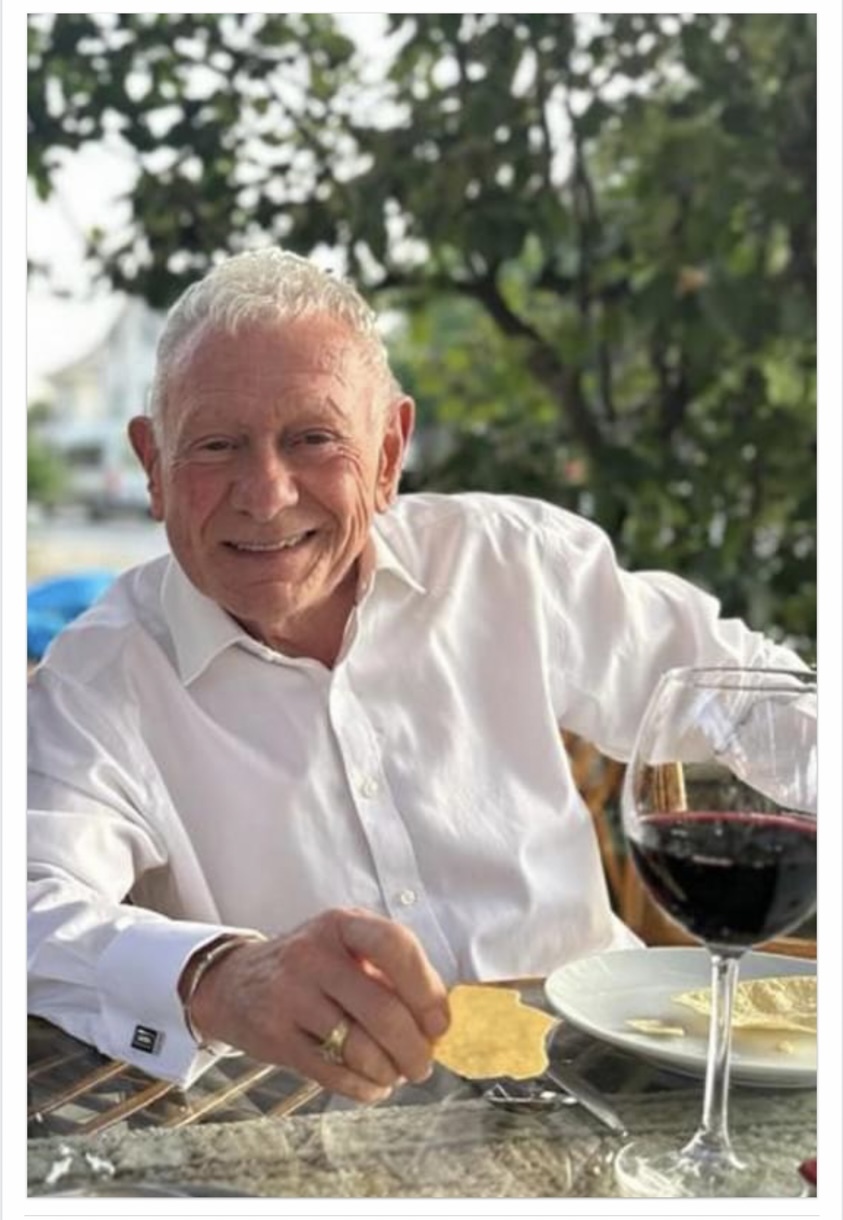 David lives with essential tremor
 David centre, behind the lectern