
Ian's story
Ian shares her personal story about living with essential tremor
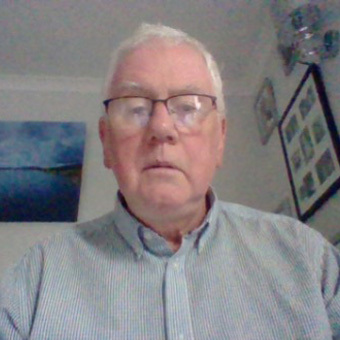 Ian raised awareness during National Essential Tremor Awareness month
My name is Ian Sharp. I have had essential tremor in both hands for the last 40 years. I first noticed it in my early thirties in my dominant hand when my handwriting became very scrawled. Gradually over the years my right hand became worse.
I was formally diagnosed in my mid fifties with dystonia and subsequently in my early sixties with essential tremor by a neurologist. Both conditions are often mixed up by GPs.
Needless to say, it has affected my everyday life and work substantially, and I had to give up work in my mid fifties. Strangely enough, I then embarked on opening a bed and breakfast business from my home. I found this helped a lot in giving me more control and confidence, as being in familiar surroundings helped with anxiety and meant I could cope with things on my own terms.
I also found it helpful to explain to guests what my tremor was. In doing so, I was able to educate people more about essential tremor. I have always found that tackling it head on was the best way for me personally to deal with it. My advice to anyone with ET is not to give in to it and let it control your life, although I appreciate that is easier said than done.
Five years ago I had focused ultrasound treatment on my left side, which has improved the impact of my tremor tremendously.
Since then I have become involved in running a small support group in Scotland to raise awareness of essential tremor, as well as taking part in NTF webinars and Teams meetings.
Being part of a bigger organisation such as the National Tremor Foundation has helped me connect with a wider community that shares experiences and expertise. Being part of the NTF also provides clear, accurate information about tremor, diagnosis, treatments and research.
Tremor affects people physically, emotionally and socially. Many people may feel isolated due to a lack of local awareness, support groups and specialised resources. Joining a national organisation like the NTF provides access to local support groups and educational resources that help members understand their experiences, challenges and coping strategies.
Being part of a bigger organisation also helps amplify the voices of people with tremor on a national level and can help influence policy and health services. Being part of a UK wide network means people are not on their own and can tap into broader expertise and support.
During National Essential Tremor Awareness Month I distribute posters and leaflets to local doctors’ surgeries, pharmacies, libraries and shops, including supermarkets. In past years I have also given short talks on essential tremor to GP surgeries in the surrounding areas.
Together, we can make sure no one faces life alone with tremors
Make a donation today